Amazonita mundo
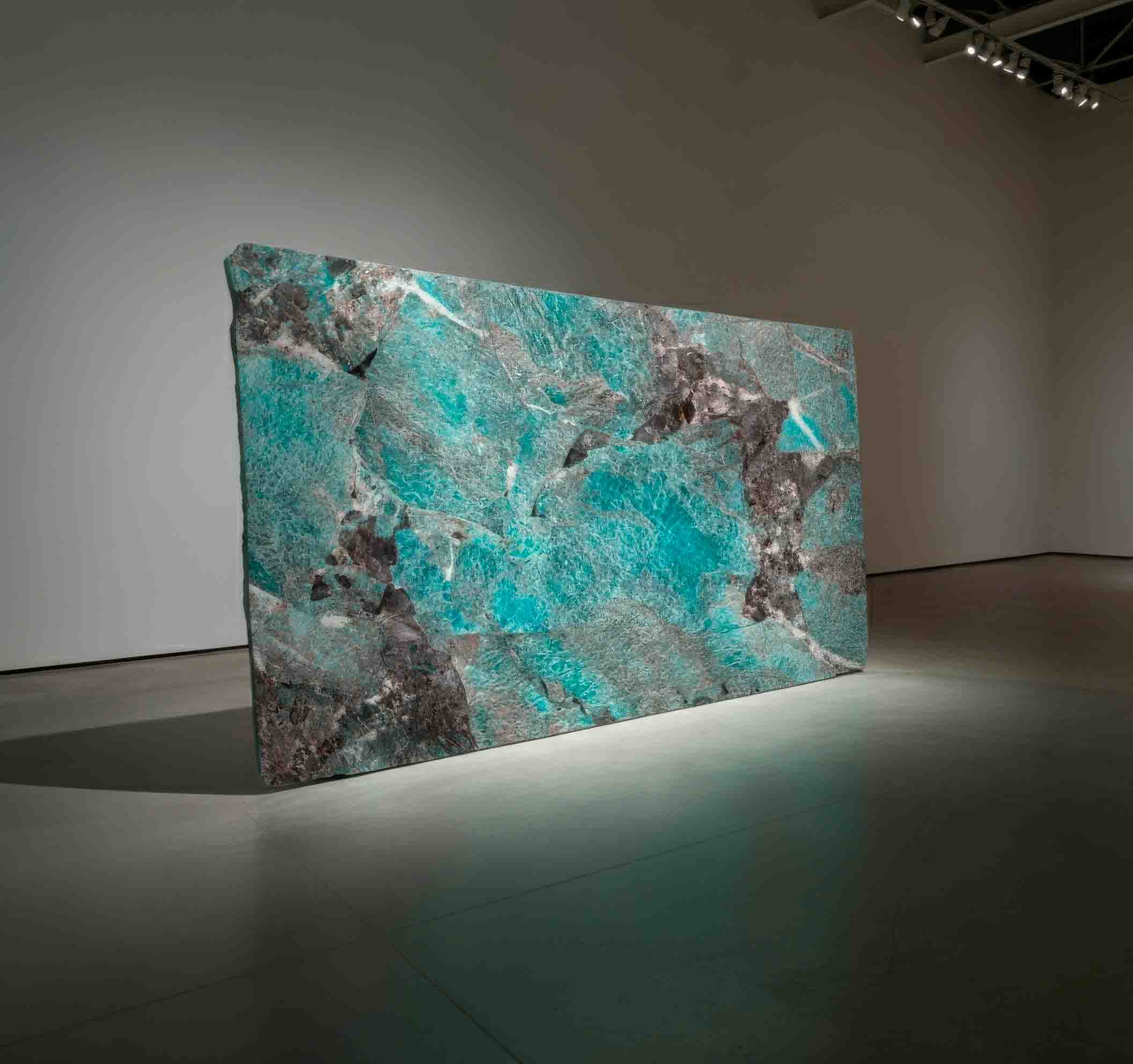
Amazonita nivel mundo .
teste
O knzdslknkçznlknzçkfnzç
Escovado: quando a textura ganha protagonismo
Se o polido amplifica a luz, o escovado valoriza a textura. O acabamento escovado preserva relevos sutis da superfície, criando uma textura delicada que reforça a autenticidade do material. O resultado é uma experiência mais sensorial, em que a matéria se expressa não apenas visualmente, mas também através do toque. Em quartzitos como o Speranza, com seus veios orgânicos em tons de verde, o escovado ressalta a naturalidade da composição e reforça sua conexão com elementos da paisagem brasileira. É uma escolha frequente em projetos que valorizam acolhimento, texturas naturais e uma sofisticação mais discreta.
Levigado: equilíbrio e suavidade
Entre o brilho do polido e a textura do escovado, existe um caminho de equilíbrio. O acabamento levigado apresenta uma superfície lisa e acetinada, capaz de absorver a luz com suavidade. Os movimentos da rocha permanecem evidentes, mas de maneira mais sutil e contemplativa. Materiais como o Crystalline Ice, conhecido por sua superfície clara e pela translucidez de seus cristais, encontram no levigado uma forma elegante de expressar sua delicadeza natural. O mesmo acontece com mármores como o Palladio e o Platinum Nuvolato, cujos desenhos delicados se revelam sem excessos. O resultado é uma estética atemporal, que se integra à arquitetura com naturalidade.
Cada rocha possui uma identidade própria. Algumas pedem brilho para revelar sua profundidade. Outras encontram na textura sua forma mais autêntica de expressão. Há ainda aquelas que se destacam pela suavidade e pelo equilíbrio. Por isso, a escolha entre polido, escovado ou levigado não deve ser vista apenas como uma decisão técnica. Trata-se de compreender qual interpretação melhor valoriza a essência do material e a atmosfera que se deseja criar.
Cada material do nosso portfólio é escolhido por sua singularidade, sua origem e sua capacidade de transformar espaços através da arquitetura. Ao longo dos anos, vimos uma mesma rocha assumir diferentes interpretações em revestimentos, bancadas, peças de mobiliário e criações desenvolvidas em parceria com arquitetos e designers. Mais do que uma etapa técnica, o acabamento influencia a forma como a luz interage com a superfície, como os veios são percebidos e como a beleza natural do material se apresenta em cada projeto. É nos detalhes que cada rocha revela seu caráter único.
The growth of high-end architecture in Brazil, coupled with the appreciation for natural materials with known origins and a distinctive identity, has led Amazonite to occupy a new space. More than just a cladding material, it has become an element capable of defining the personality of an environment.
When the rock becomes the starting point of the project.
In contemporary architecture, some materials cease to be merely an aesthetic choice and become the very concept of the project.
With Amazonite, this happens naturally.
Its chromatic composition, formed by shades that range between greens, blues, and translucent nuances, has such a striking presence that it often forms the basis of the entire color palette of the environment. Woods, metals, lighting, fabrics, and furniture begin to interact with the stone, and not the other way around.
Instead of filling a surface, Amazonite organizes the architecture around it.
No two sheets of wood are alike. And that is precisely their greatest quality.
Unlike mass-produced materials, which strive for repetition and uniformity, Amazonite possesses a characteristic that is increasingly valued by architecture professionals: uniqueness.
Each slab has its own unique composition of minerals, transparencies, veins, and natural movements that are never repeated exactly in the same way.
This exclusivity transforms each project into a unique composition. There is no "standard Amazonite." There is the slab chosen for that space, with characteristics that belong exclusively to that project.
Therefore, material selection is as important a step as the development of the architectural concept itself.
Lighting is also part of the specification.
Few materials respond to light as intensely as amazonite.
Throughout the day, the incidence of natural light alters the perception of its colors and highlights different depths of the surface. In indoor environments, indirect lighting enhances the crystals and creates new layers of interpretation of the stone.
In specific applications, backlighting further enhances this effect, highlighting naturally translucent areas and transforming panels into true scenic elements.
More than just illuminating the stone, light becomes part of its language.
Where Amazonite takes center stage.
Although it is an extremely versatile rock, there are applications where its expressiveness stands out even more.
Large internal panels allow one to appreciate the continuity of the sheet metal's natural patterns, creating surfaces with a strong visual impact.
In countertops, islands, and washbasins, stone transforms functional elements into statement pieces.
In terms of furniture, tables, sideboards, and special objects bring architecture, art, and design closer together, exploring raw materials in a sculptural way.
Regardless of the application, the recommendation is usually the same: allow the stone to be the star.
The fewer elements that visually compete with it, the greater its ability to transform the environment.
The new architecture values materials of origin.
For a long time, the choice of a natural rock was guided primarily by its appearance.
Today, architects and specifiers also consider its origin, availability, continuity of supply, and responsibility in extraction.
This change reflects a broader transformation in contemporary architecture, which has come to value materials capable of telling stories and establishing connections with their origin.
Knowing where a rock was extracted, how it was processed, and who guarantees its continued use is no longer just technical information. It has become part of the project's own value.
Amazonite: a Brazilian treasure that remains in Brazil.
Internationally recognized, Brazilian Amazonite has gained prominence in some of the world's most sophisticated projects even before becoming a constant presence in national architecture.
Today, this trend is beginning to reverse.
With the maturing of the high-end Brazilian market and a growing demand for exclusive natural materials, Amazonite is becoming increasingly integrated into residences, developments, and projects designed by Brazilian architects.
It is a movement that brings national architecture closer to one of the country's greatest geological treasures.
Amazonite in Granistone
At Granistone, Amazonite is part of a story built from the very beginning.
The company is the only one in the world capable of guaranteeing a continuous supply of rock on an industrial scale, thanks to its own quarries and control over the entire production chain. This control allows it to monitor each stage of the process, from extraction to processing, offering predictability, traceability, and consistency for projects of different sizes. Furthermore, investments in new exploration areas and technology are continuously expanding the possibilities for stone patterns and applications.
More than just supplying a natural stone, Granistone connects architects, designers, and specifiers to a material that represents the meeting point between exclusivity, nature, and Brazilian architecture.
Designing with Amazonite means understanding that some choices go beyond simply covering a surface.
Each slab carries millions of years of geological formation, unique patterns, and an identity that no industrial process can reproduce.
Receba conteúdos exclusivos da Granistone
Assine nossa newsletter e receba artigos sobre rochas naturais, arquitetura, design e tendências do setor.